Home
The School of BioSciences is dedicated to discovering how plant systems function and to solving the ongoing challenge of maintaining food, health, land and water for society and the planet’s natural and agro-ecosystems.
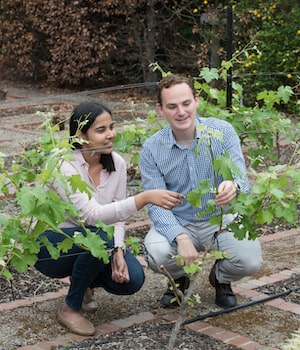
World-class research in plant science
Our research seeks to address major economic, health and environmental challenges of the present and the future. It is enriched by our world class facilities, talented students, international partnerships, and our collaborations with industry, government and the community.
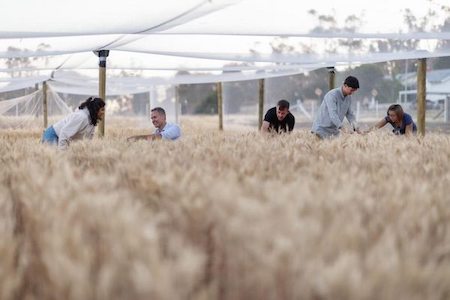
Research highlight: fighting hidden hunger with A/Prof. Alex Johnson
Associate Professor Johnson explores how plants absorb nutrients and the factors affecting nutrient bioavailability in edible parts of plants. Using biofortification, Johnson and his lab redesign wheat, boosting its levels of essential micronutrients such as iron and zinc to increase the nutritional quality of crops.
Facilities and programs
These are some of the facilities and platforms students and staff can access.
-
Advanced Microscopy Facility
The University of Melbourne maintains a state-of-the-art electron and optical microscope facility with nodes located at the Bio21 Institute and the School of BioSciences.
-
Glasshouse Complex
The Glasshouse is a research and teaching facility jointly administered by the Faculty of Veterinary and Agricultural Sciences and the School of BioSciences. Controlled environments include glasshouses, growth rooms and growth cabinets. Other facilities include a plant and soil sample processing laboratory.
-
The University of Melbourne Herbarium (MELU)
Built up over nearly a century, the University of Melbourne Herbarium houses 150,000 specimens of plants, fungi and algae, including historically important collections and artwork.
-
Melbourne Pollen Count
The Melbourne Pollen Count forecasts the level of pollen in the air, alerting those who suffer from hay fever and seasonal asthma of the likelihood of being exposed to high levels of grass pollen.
-
Mass Spectrometer and Proteomics Facility
The Mass Spectrometry and Proteomics Facility provides academic and industry researchers access to specialist mass spectrometry and proteomic equipment and expertise.
Support plant science with the Botany Foundation
The Botany Foundation supports excellence in education and research relating to the use of plants, the environment, food security and nutrition. Funding is given to an array of research areas and programs to assist students and professionals in plant science as well as support to important research facilities such as the University of Melbourne Herbarium.
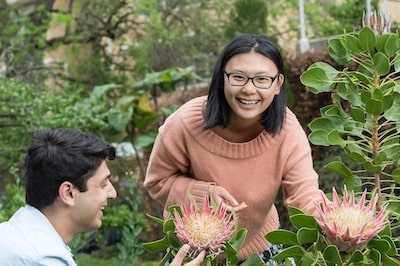
Study plant science with us
Our plant science programs attract talented domestic and international students and graduate researchers. Our diverse undergraduate subjects and Plant Science major foster discovery of the broad areas of plant science, from agriculture to horticulture, and from conservation to biotechnology, whilst learning practical labs skills and enjoying field experiences.
Our graduate programs enable specialisation and the opportunity to be supervised by world class academics, study internationally, obtain industry placements and become a member of the University of Melbourne’s globally significant research community.
Plant Science major Undergraduate subjects Studying plant science