Study with us
Studying plant science enables students to undertake undergraduate and graduate studies in diverse topics from agriculture to horticulture, to conservation to biotechnology with diverse topics such as single-celled algae, giant eucalyptus trees, ancient ferns, plant toxins and crop plants that supply most of the world’s nutritional needs.
How can I study plant science?
-
The Bachelor of Science with Plant Science Major
The Plant Science major provides a springboard for students entering careers or research in all fields requiring a solid understanding of plants and their environments. Graduates will develop a comprehensive integrated knowledge of the biology of plants as well as both field and laboratory skills.
-
Master of Science (BioSciences)
Graduates of the Plant Science major can undertake specialist science and environment degrees such as a Masters in BioSciences, Ecosystem Science, Biotechnology, Environmental Science, and Environment and Ecosystem Management and Conservation.
Depending on undergraduate subjects undertaken, entry may also be possible into a range of other graduate degrees in fields like medicine, health sciences, business, and more. -
Doctor of Philosophy
Graduates of an Honours year or Masters with a significant research component can choose to study a PhD, under the supervision of top academics.
Our current PhD candidates in the plant science research community are undertaking diverse projects from cell wall synthesis and computational analysis of plant cells to plant root performance and crop development.
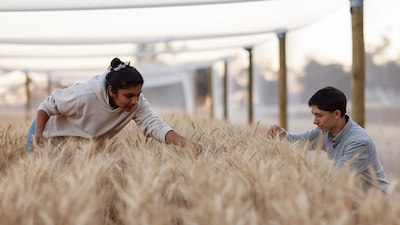
Student highlight: Rucha Patil
Rucha Patil, current Master of Science (BioSciences) student under the supervision of Associate Professor Alex Johnson and Dr. Kate Howell, investigates yeast-bacterium interactions in the sourdough bread system.
Her research has been enhanced by hands-on experiences such as attending Grainz, a three day bakers conference.
I learned about the science of sourdough through learning to bake bread and seeing the bakers handle the dough with such precision. My excitement for the science only grew.

International study in Germany
In the Melbourne-Potsdam PhD Programme (MelPoPP) and the Jülich-University of Melbourne Postgraduate Academy (JUMPA) candidates are supervised by top academics located at the University of Melbourne and prestigious institutions in Germany such as the Max Planck Institute of Molecular Plant Physiology and the Forschungszentrum Jülich GmbH, experience different research environments, gain new cultural perspectives and establish valuable international connections.
Current PhD projects include diverse topics such as:
- The circadian clock
- Sugars and cell wall synthesis
- Computational analysis of plant cells
- Plant root performance and crop development.
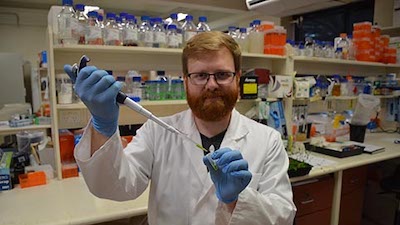
International experience: Mike Ogden
It is very unique to learn in different institutes, surrounded by such a diverse range of passionate researchers across many scientific fields and cultures. Mike Ogden, MelPoPP Candidate
Career pathways
Studying Plant Science can open many careers opportunities in fields such as:
| Agriculture | Biotechnology | Conservation |
| Ecotourism | Education | Forestry |
| Food technology | Horticulture | Resource management |
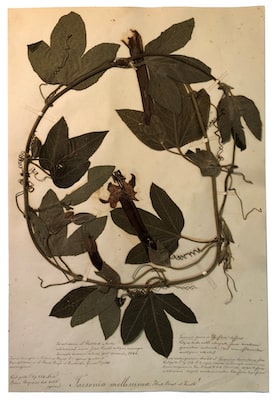
Alumni highlight: Jessica Gardner
Jessica Gardner completed a Master of Science (BioSciences) in 2019 and investigated the horticultural potential and nutritional value of native Australian sweet potatoes. She is now a Senior Curation Assistant at the National Herbarium of Victoria where she studies, processes and mounts plant specimens that are between 100 and 150 years old.
Working on super-old plants is really cool and fun (especially for a plant nerd!) Despite their age, some plants still have green leaves and brightly coloured flowers. Some of the locations and collectors are really interesting too - the other day I came across a specimen that was once part of a collection owned by Prince Roland Bonaparte!