Emile van Lieshout - Humans of Biosciences
Meet Emile van Lieshout who completed his PhD and a postdoc in the former Department of Zoology here at UniMelb and returned to our School earlier this year as a Teaching Specialist. Originally from the Netherlands, Emile is a passionate educator, committed to helping all students to become great biologists. If you’ve never asked Emile about his PhD, make sure you do – you’ll learn more about earwig penises than you thought possible.
Who are you and what do you do in the School?
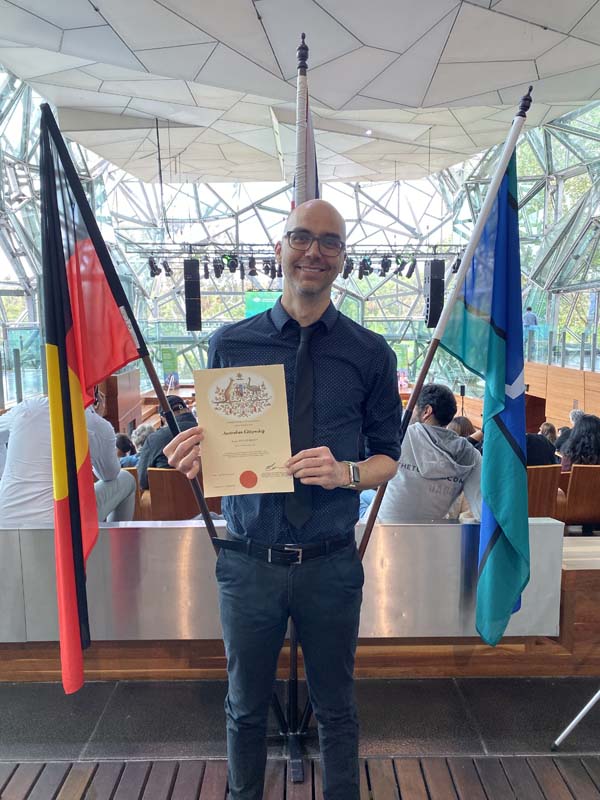 I started in 2021 as a teaching specialist in BioSciences after teaching science and senior biology at some great high schools in Perth and Melbourne. This background left me with a wide interest within the subject, and this is reflected in the subjects I teach in BioSciences. I have been involved with the first-year subjects; Biometry, the graduate-level data analysis subject; Animal Behaviour, a subject close to my heart; and Wildlife Management, a graduate-level subject co-taught with the Faculty of Veterinary and Agricultural Sciences. Aside from my teaching, I'm active in BriteLab (the community of practice for teaching staff in BioSciences) where I co-organise the Journal Club, work with VCE students undertaking the University of Melbourne Extension Program (UMEP) in BioSciences, and am involved in some outreach activities within the school.
What drives you to improve Teaching and Learning in the School?
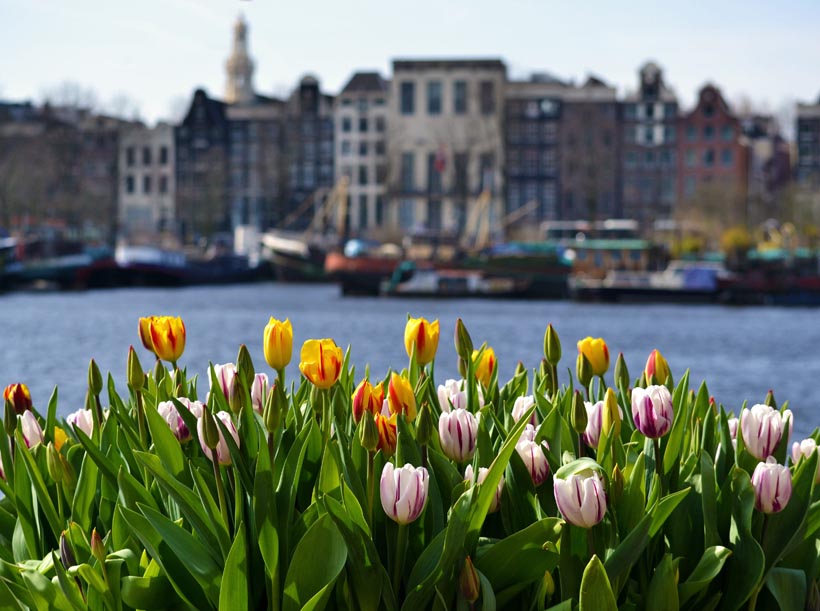
I think back very fondly to my own undergraduate days at the University of Amsterdam (pictured). I had been a budding biologist since I was a little boy, playing with arthropods in my backyard, so university offered an opportunity to gain so much knowledge and skill in a field that I aspired to. Above all else, I want to share that opportunity with students and instil a sense of wonder with the natural world. Ideas about what constitutes good teaching have come a long way since that time though, and contemporary pedagogies indicate 'active' learning strategies are far more effective than formats that rely on diffusion of knowledge from lecturer to student. Indeed, almost 25 years later, it's the practicals, excursions, and research projects that I recall. Additionally, I think there is a much greater awareness now of the diversity in the classroom, in a range of dimensions, and my time in the closer-knit context of the secondary system has taught me to appreciate that and cater to it. I want to draw on those new insights and enable all of our students to become great biologists.
How does your zoology research background influence your teaching?
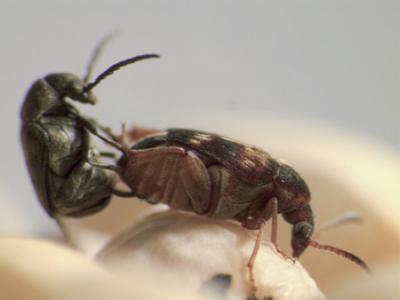 Principally, a science education should imbue you with a curious mind, the ability to ask and address meaningful questions, and the tools to communicate your thoughts. My own research was critical in forming these in me. Most of it was conducted on some rather uncharismatic-looking species (pictured). Yet, questions like "Why on earth does this earwig need two penises that are as long as he is?" and "Why does that female seed beetle keep trying to kick the male during mating?"
 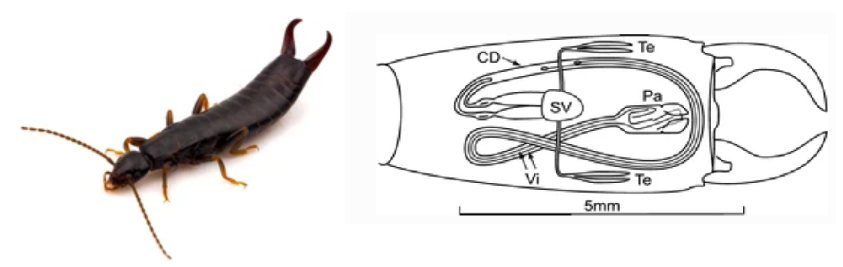 can form the basis for some wonderful years of PhD and postdoctoral research. Consequently, I am a big advocate of involving students in research projects that are meaningful to their interests. To address questions for which we do yet have the answers. It's great to see that first-year students in BioSciences have these opportunities.
Do you have any outlandish stories from your time here at UniMelb?
It's an often-heard complaint that health and safety measures have ruined all the fun these days. Humbug, I say! As evidence I'll cite a truly terrifying event at a Christmas party in the Zoology department during my PhD days. It was Greek and Roman themed, so naturally there were games, the first of which was arm wrestling. We surrounded the lab bench where the first clash was to occur between two of my PhD colleagues (both of which occupy successful positions at other universities). Shortly after commencing, we heard this dreadful sound like a whip snapping: one of them had broken their humerus! I don't think Christmas parties were ever the same afterwards, for good reason.
Do you have any advice for current students?
While you might dedicate a lot of your time to master statistics and other obvious research skills, we find that an overlooked quality is collaboration. Yet, for any lab group looking for honours students, research assistant, PhDs, and postdocs, this is an absolute necessity. The ability to work collaboratively on a project requires effort, empathy, reflection, and practice. Next time you're in a (break-out) room, see if you can improve the way you work together, as this is closely tied to project outcomes.