Grace Boxshall - Humans of BioSciences
Meet Grace Boxshall, a PhD student who is not only setting out to solve some of the mysteries of Australian mushrooms but also contributes to our School in a variety of other ways including teaching and being a member of two of our committees. Also a self-professed collector of ‘Weird Hobbies’, don’t be surprised if you see Grace performing circus tricks, carving wooden spoons and perhaps soon – throwing axes.
Who are you and what do you do in the School?
I’m a PhD candidate in the Plant Systematic Research Group. But I study mushrooms, not plants! My field is called mycology (mushroom science) and my focus is on evolution, systematics, and taxonomy of macro fungi. There is a mycology lab at the university, but they use very different techniques to investigate the molecular biology of micro fungi like yeasts and pathogens. In the Plant Systematic Research Group, we all do similar analyses and deal with the same theories and principles around evolution and taxonomy. Although I miss being able to talk fungi with fellow fun gals, guys, and folx, I really appreciate being able to troubleshoot and confer with people doing similar work to me.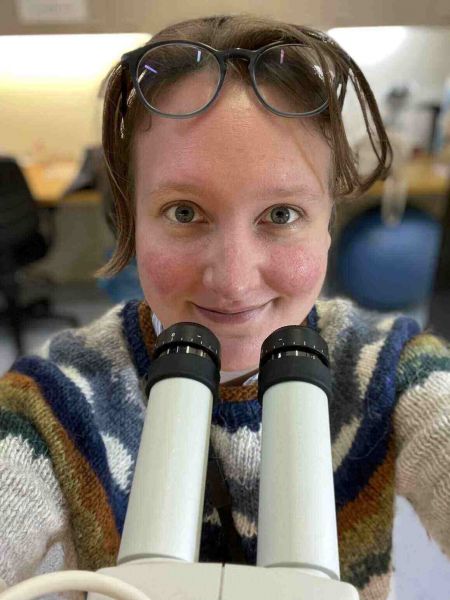
I also moonlight with various other casual contract jobs for the School of BioSciences. You might meet me as I demonstrate for practical classes in Plant Biodiversity and Flora of Victoria, run tutorials for Biology of Australian Flora and Fauna, or occasionally count pollen for the Melbourne Pollen Count.
Last but not least, I sit on two committees in BioSciences: the BioSciences Engagement and Advancement Committee and the BioSciences Student Advocacy Working Group. Through these committees, I hope to get more people interested in studying BioSciences and make sure students already within BioSciences are supported.
What problem are you trying to solve with your research?
When it comes to mushrooms, people always want to know how to get high or which mushrooms they can eat. But unlike in other parts of the world, mushrooms in Australasia remain a mystery. Thanks to the treatment of Indigenous peoples by white settlers, the faulty perception that the fungi in Australasia were the same as in England, and the chronic underfunding of all sciences (but especially mycology), we don’t even know what species of fungi are here.
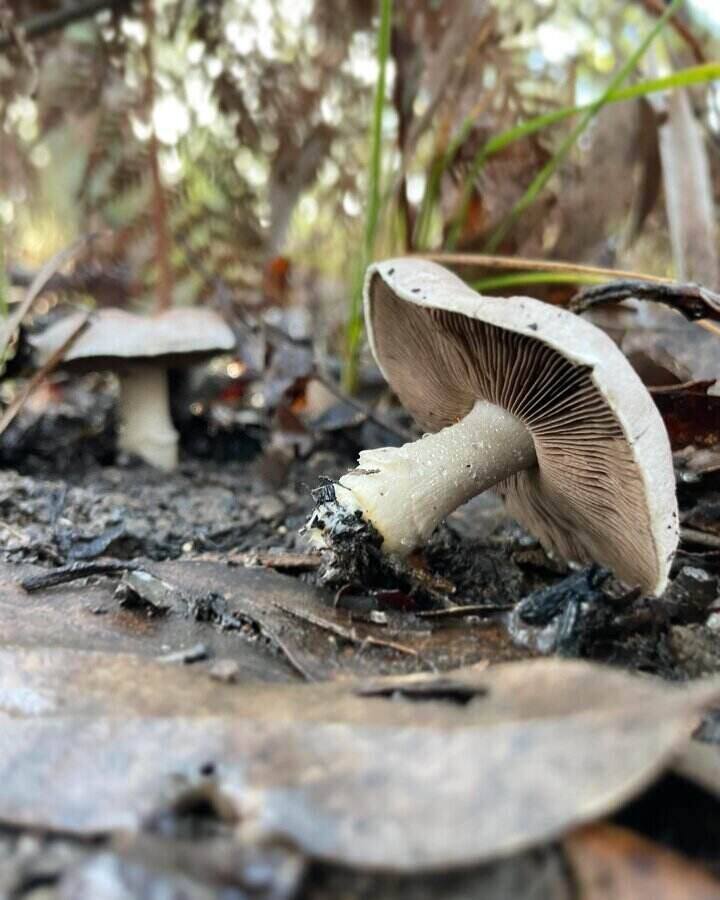 The lack of fungi knowledge in Australasia is becoming more and more of a problem as interest in foraging wild mushrooms grows. And interest is growing! People are passionate about finding and eating wild mushrooms, but so many of the species they eat are unknown to science. We don’t even know if the mushrooms are poisonous or edible. Which in turn creates more problems if they have to go to hospital.
So for my PhD, I’m working on the field mushroom genus (Agaricus). I’m trying to work out how many species of Agaricus we have in Australasia (discovering as many new species as I can along the way) and also work out how they relate to field mushrooms around the world. That way, we’ll at least know more about what’s here so foragers can tell us what they’re eating. Knowing which species of Agaricus are here will also help us better understand the complexity of our native ecosystems and give us a starting point for conservation efforts.
What do you enjoy doing outside of science?
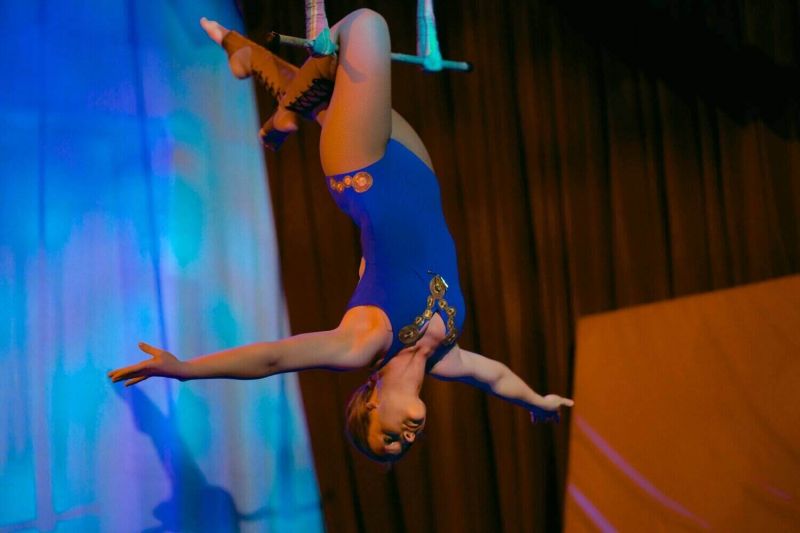 I guess you could say that my hobby is collecting weird hobbies!
I’ve been involved in amateur circus on and off for the last 15 years. My specialty used to be adagio/acrobalance, but it shifted to aerials like static trapeze and lyra. I’ve only done flying trapeze once, and it was utterly exhilarating. Believe it or not, I’m terrified of heights. I used to think my fear of heights meant I could never do aerials, and I’m so glad a coach once challenged me to not let fear stop me. Many of the friends I trained with have gone on to NICA (National Institute of Circus Arts) or are full time coaches/performers. While I’m nowhere near as good as them, I love to learn new skills and love to perform.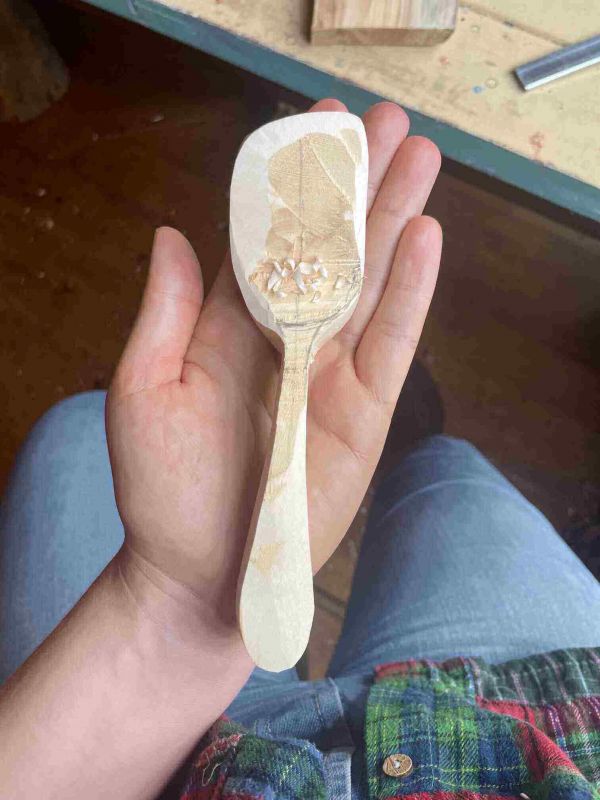
Other hobbies include German longsword (using techniques from the 14th century, handed down via poetry), historical sewing, gardening and composting, bushwalking, and greenwood spoon carving. A friend taught me how to carve spoons last year just as lockdown hit and I absolutely fell in love! I’ve only made around 9 completed spoons, but I have three more that have been awaiting their final cuts for far too long… carving has been a really good lockdown hobby. There’s something incredibly satisfying about using your hands, some sharp knives, and seeing lovely carved shapes and lines emerge from a log.
The next sport I want to get into is competition axe throwing.
Do you have any advice for other students?
Absolutely. I encourage undergraduate students to take this time to explore. It’s good to be strategic, but don’t lock yourself in prematurely. You’ll never have this opportunity again so make the most of it. Explore strange and interesting subjects - you never know what might turn into your next passion. If you find something super cool that you wish you were good/cool enough to try, just try it! Embrace weird, and don’t be afraid to volunteer or intern to get a taste of different fields.
At the same time, don’t feel ashamed if you need to take time off uni or do fewer subjects per semester. There’s no right way to do a degree. You are not a failure if you decide to do things differently.
I also encourage anyone looking to do higher research to do their due diligence before committing to a project. I cannot overemphasise how important getting the right supervisor is: try volunteering with a supervisor first, talk to their past students to see what they’re like, and don’t pursue a project with them if you’re concerned that they might not support/respect/listen to you.
And most of all: this is a marathon, not a sprint. Your health (mental, emotional, physical) is more important in the long term than this degree. You need to take care of yourself first.
On twitter and Instagram I'm @graceaceae, but you can also check out my research at ResearchGate or follow my citizen science/science outreach project on iNaturalist, Facebook, or Instagram.