Sian Macdonald: Humans of BioSciences
Meet Sian Macdonald who is a Master’s student in the PEAR-G lab. Sian’s research explores how the bacteria Spiroplasma influences survival and reproduction of vinegar flies experiencing heat stress. Outside the lab, Sian loves gardening, painting, sewing and hanging out with her cat. She is passionate about students getting research experience as soon as they possibly can.
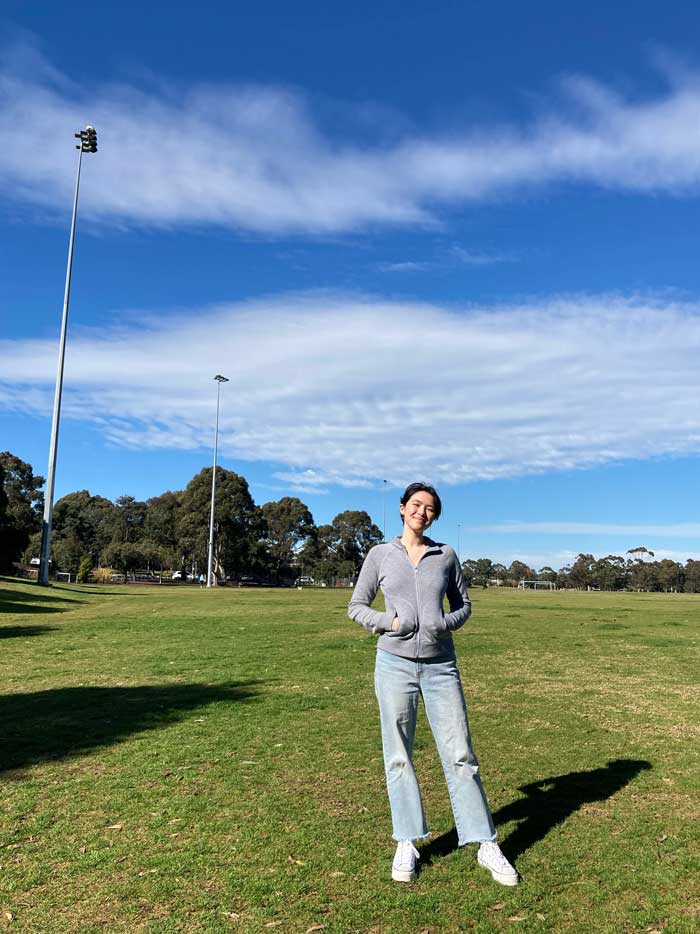
Who are you and what do you do in the School?
My name is Sian and I’m a first-year student in the Master of Science (Biosciences). I’m currently working in the PEAR-G lab in the Bio21 building, with my supervisors Belinda van Heerwaarden and Xinyue Gu. My research involves the vinegar fly, Drosophila hydei and its relationship with the bacteria, Spiroplasma. This year, I have also worked as a lab demonstrator for a few first-year biology subjects at Melbourne Uni.
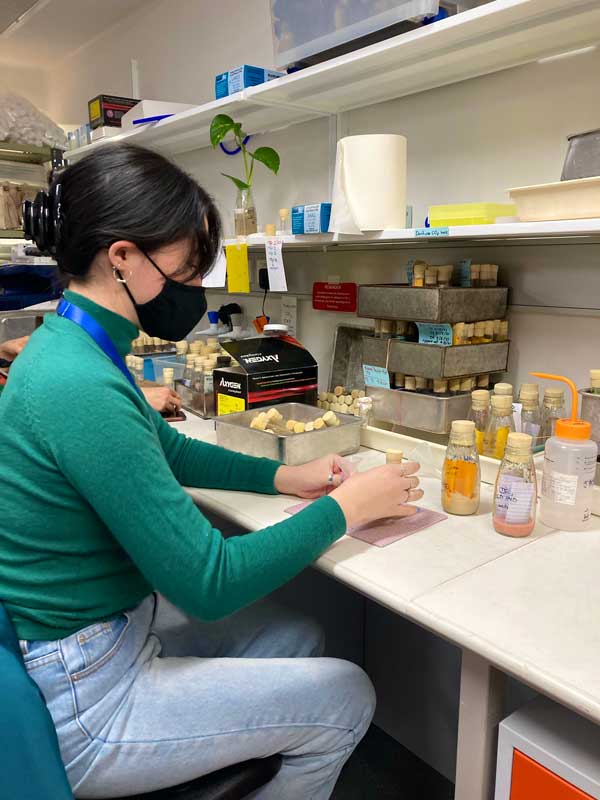
What problem (are/were) you trying to solve with your research?
My chosen research project is looking at the effect of the heritable bacteria Spiroplasma on the vinegar fly, Drosophila hydei, under increasing temperatures. Insect populations are currently under threat from rising temperatures due to climate change and we’re hoping that the presence of the bacteria will help flies tolerate heat stress. I will be focusing on how Spiroplasma influences the survival as well as the reproduction of the fly. Despite being crucial to a population persisting, reproduction as a trait has not been heavily investigated in previous climate change and endosymbiont studies so I will be focusing on that during my project. Also, this particular bacteria, Spiroplasma, has not been widely studied in Australian Drosophila so I’m really excited to see what results my research brings about.
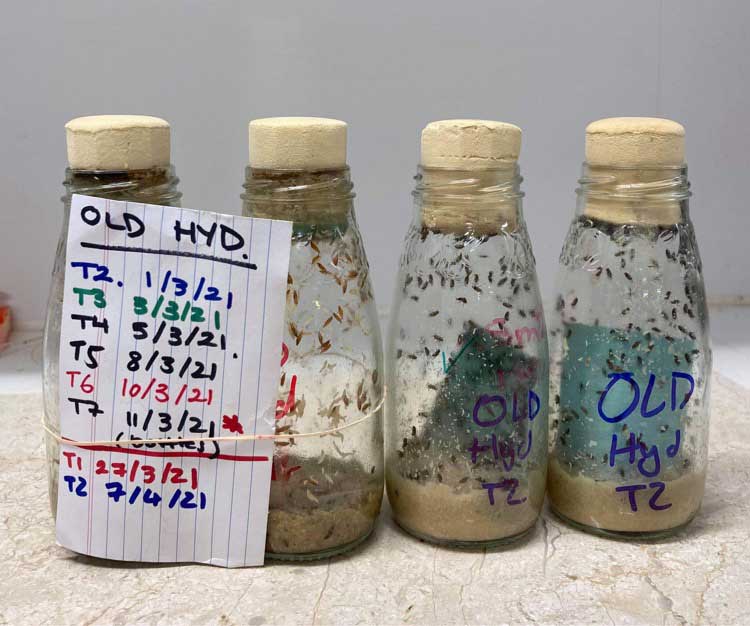
What do you enjoy most about your research and what do you find most challenging?
At the moment, I’m only at the beginning of my project but my favourite part so far has been taking care of my flies as well as getting to design the experiments and watch them slowly come to life. The most challenging part I’d say is wrapping my head around all the steps for the molecular work, I can only hope that one day I won’t need to keep referring to my instruction manual.
Do you have any advice for other students?
When I first started my undergraduate degree, I had no clue what I would be able to pursue with a major in genetics. There are so many options with a Bachelor of Science and I would definitely encourage students to reach out to the academics on campus because there are so many interesting fields and projects you might not have known existed. I’d also advise anyone who is curious about research to look into doing an internship or research project subject. As someone who hadn’t had proper research experience before, my only regret is not starting sooner!
Twitter: @sianmwmacdonald
Instagram: @sianmacdonald
'Humans of BioSciences' is a special series to introduce the School of BioSciences' undergrad and postgrad students, our academics, professional staff and associates.