Humans of BioSciences: Katie Moon
Meet Katie Moon, a postdoctoral researcher in the TIGRR lab who studies DNA from living and extinct species to uncover the history of different ecosystems to help shape their future. After five years in California studying everything from mammoths to walruses, Katie returned to Australia to tackle conservation challenges closer to home. Outside the lab, Katie is a devoted live music fan, traveller, reader and a self-confessed nerdy boulderer.
What do you do in the School?
I am a postdoctoral researcher in the TIGRR Lab, meaning I spend my days researching various scientific aims, either in the lab, in the field, or at my computer. I came home a couple of years ago after 5 years in California as a postdoc in the Paleogenomics Lab at the University of California Santa Cruz. During that time, I specialised in ancient DNA research, learning how to extract and analyse DNA from incredibly old and degraded samples. I got to work on wide variety of species, everything from mammoths and bears to bilbies and walruses, but the aim was always to use genetic data to reconstruct past ecosystems and figure out what happens to species when those ecosystems change.
After 5 years abroad, I really wanted to bring home what I had learned and apply it to Australian ecosystems. Now I extract and analyse DNA from both living and extinct Australian species to answer a variety of research questions: How are current populations doing? What caused historical extinctions? And what innovative DNA-based solutions can we develop to address Australia's unique conservation needs? My ultimate career goal is to use conservation genomic and paleogenomic technologies to push back on some of the threats we face.
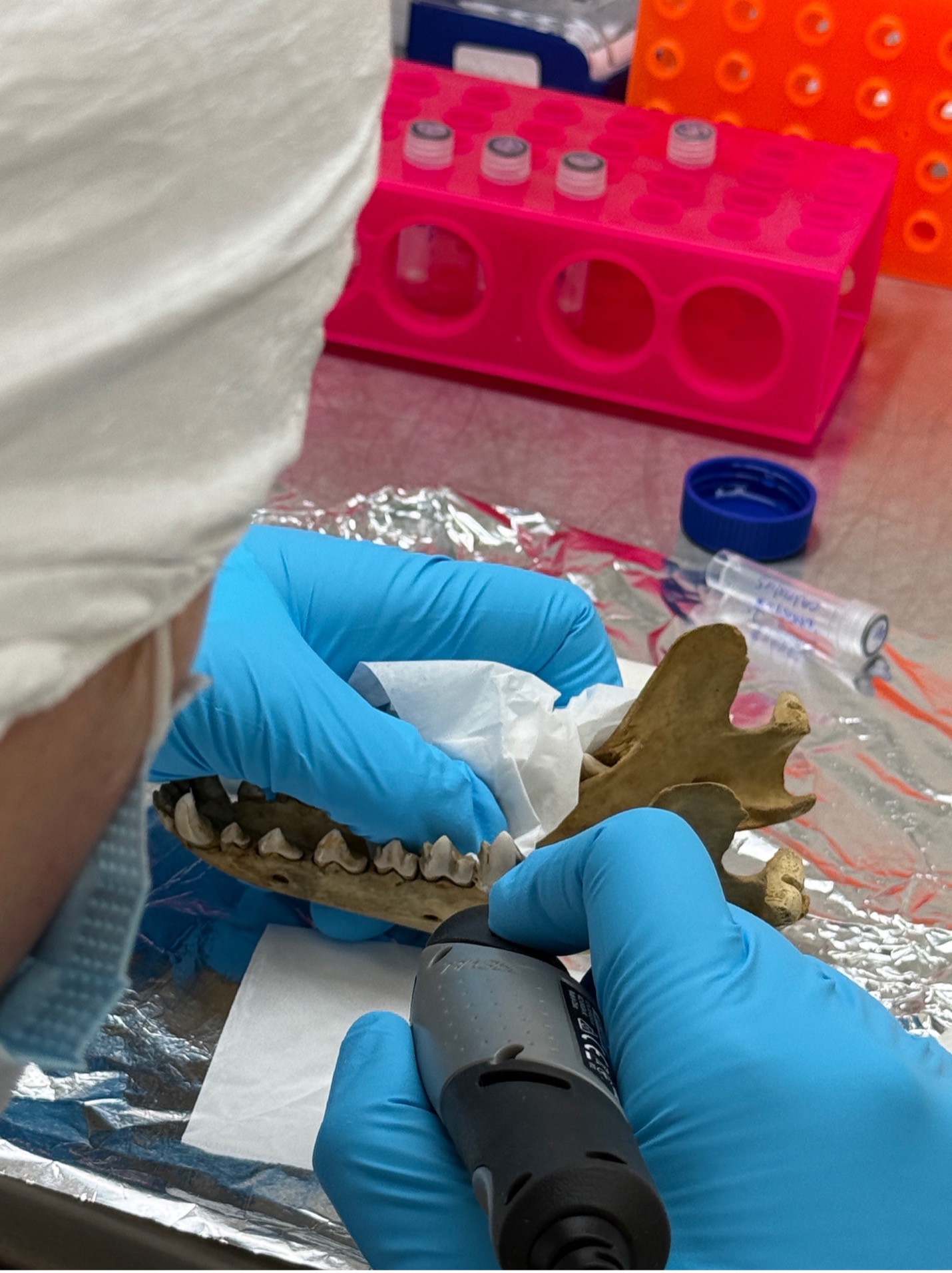
Katie in the ancient DNA lab working on a thylacine specimen (photo credit: Dr. Brandon Menzies)
What are you trying to achieve with your research?
Oh, just the completely normal and totally achievable goal of saving the planet. I blame it on watching too much Captain Planet as a kid.
What do you enjoy doing outside of science?
Don’t tell science, but music was my first love. I am really most at home in a crowd somewhere listening to live music. Whether it’s loud and angry or soft and atmospheric, in a fancy seated theatre or a damp basement with sticky floors and questionable bathrooms, I am there and I am happy.
I love travelling, which is great because my job takes me all around the world. It’s such a privilege to get to go on those sorts of adventures. I also love to read (mostly fantasy let’s be honest with ourselves), and to keep fit. I run, do strength training and hot yoga, and go bouldering with a dedicated crew of similarly minded nerds.
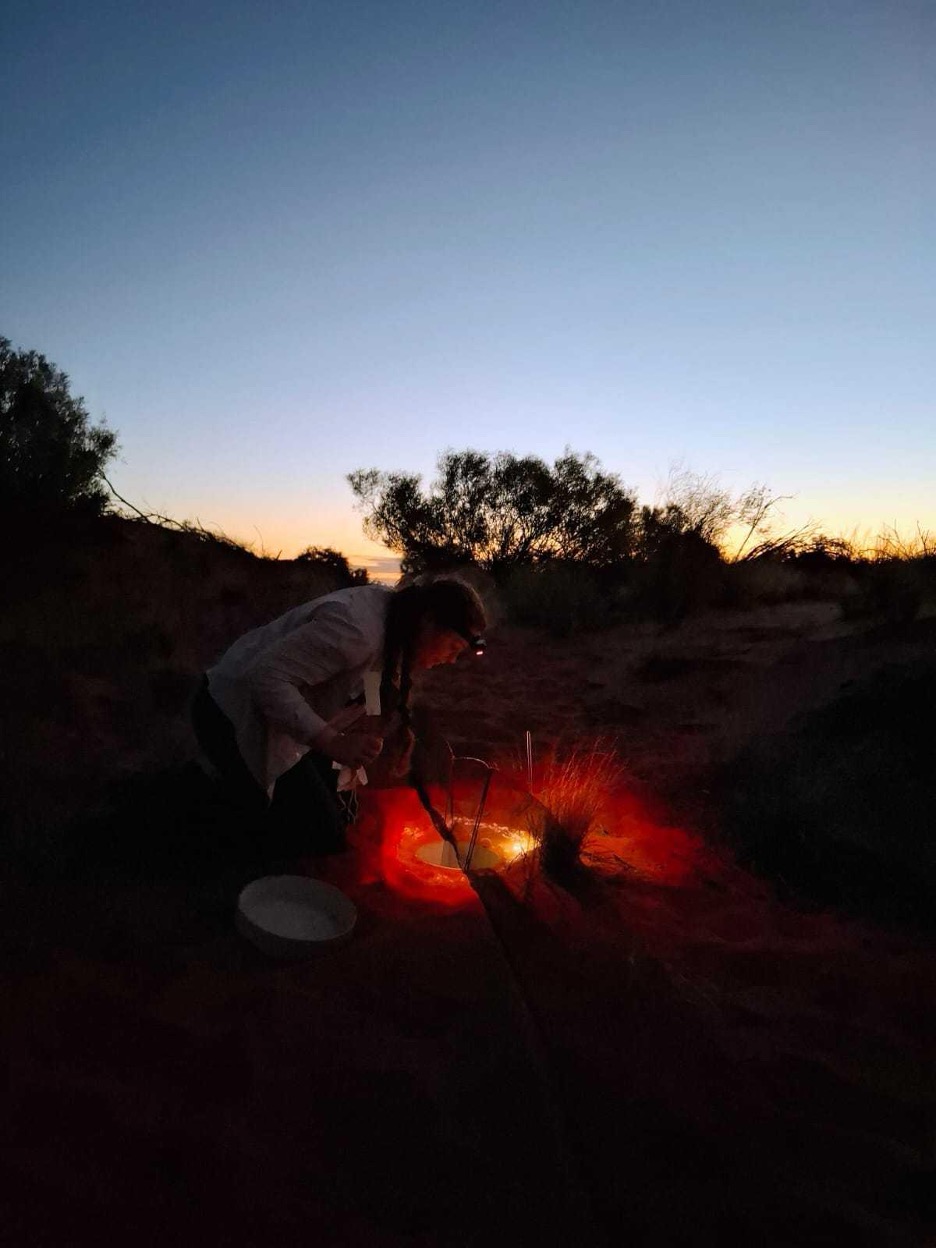
Katie in the field, pitfall trapping at Arid Recovery on Kokatha country (photo credit: Dr. Emily Scicluna)
Do you have any advice for current students?
It seems that more and more we are finally appreciating that everyone works and learns differently. If I had my time again, I think I would endlessly pester those around me for tricks that work for them, so that I could try them myself. One of the things they don’t tell you as a student, is that in addition to your coursework you are also learning how to think and work more generally. The best way to figure out what works for you (now and in the future) is to just try it. You never know what will click for you, and it’s a great feeling when it does. Eventually, you’ll become a unique mosaic of all the little tips and tricks you’ve collected that help you work with yourself rather than against it.
Why do you do what you do?
What a cool question! I think it’s something we all ask ourselves from time to time. Weirdly for me it’s remained the same since I was a kid - because I really want to help if I can. I see the environment worldwide contending with threats that we’ve caused, whether it be habitat destruction and degradation, or overexploitation, or climate change, and I feel an overwhelming need to try and do something. Basically, everything I have done in my career so far has been to develop the skills I need to help as much as I can.
What’s really cool about being in the TIGRR lab (aside from the cool name) is that I am surrounded by brilliant scientists who are trained in all different disciplines, but who are all using those methods to try and help as much as they can. Despite the considerable threat to Australian ecosystems, collaborating with a passionate team like that gives me hope for what might be possible.
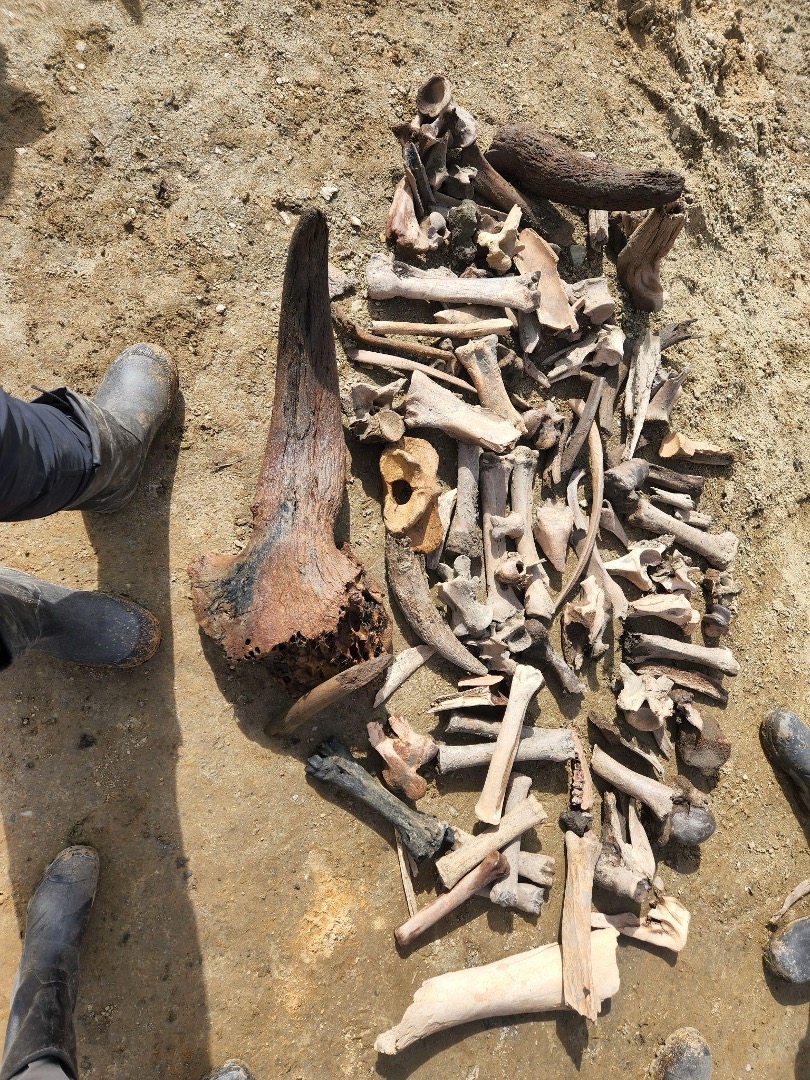
Katie's bones collection from the Yukon, Canada
What are you most looking forward to in the next 6 months?
Unsurprisingly, it’s the travel I have coming up and the Museum samples I’m working with at the moment. I am off to a conference in Sweden next month for the first International Conference on Palaeogenomics. As you can imagine, I am very excited. After the conference I am also going to take a few weeks off and visit some friends in the European summer. I also just sampled a bunch of objectively cool thylacine specimens in the Australian Museum in Sydney, which I am really excited to analyse.