Pask laboratory PhD program: Solve the world's most complex challenges—together.
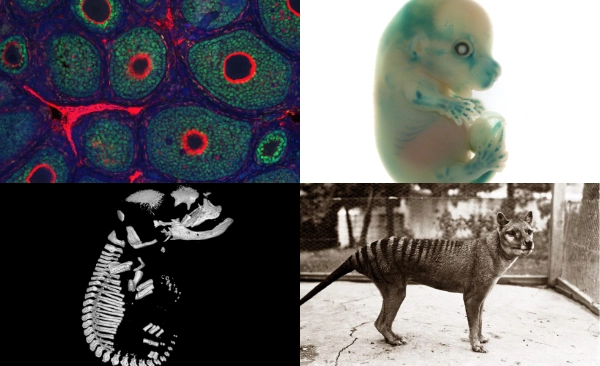
Join our vibrant, multi-disciplinary research laboratory and bridge the gap between evolution, development, functional genomics, stem cell biology and reproduction.
Are you a visionary researcher looking to push the boundaries? Our laboratory offers a unique environment where biologists, engineers, and data scientists work side-by-side to pioneer new technologies for conservation and pest control.
Why join us?
- Collaborative mentorship: Work with a diverse team of supervisors from across different fields, gaining insights from multiple disciplinary perspectives.
- Cutting-edge facilities: Access state-of-the-art laboratory equipment and specialised core facilities designed to support complex, high-impact experiments.
- Professional development: Beyond technical training, develop key research communication and leadership skills through our dedicated graduate researcher support programs.
- Career pathways: Join an alumni network that leads into top-tier academia, innovative startups, and global industry leadership.
Funding and support
- The laboratory is well funded to perform high-quality, high-impact research.
- Successful candidates will be supported to obtain the required research stipend.
Why join us?
- Collaborative mentorship: Work with a diverse team of supervisors from across different fields, gaining insights from multiple disciplinary perspectives.
- Cutting-edge facilities: Access state-of-the-art laboratory equipment and specialised core facilities designed to support complex, high-impact experiments.
- Professional development: Beyond technical training, develop key research communication and leadership skills through our dedicated graduate researcher support programs.
- Career pathways: Join an alumni network that leads into top-tier academia, innovative startups, and global industry leadership.
How to apply
15 February and 15 August
Two recruitment rounds are organised each year, with the following deadlines: 15 February and 15 August.
To apply please email your current CV, latest academic transcript, and a maximum 2-page cover letter outlining why you are interested in joining the laboratory, which area you are most passionate about (please visit our research page for details on what areas are available in the lab), and what you can bring to the group to the following email address by the deadline (late applications will not be accepted).
Email your application to
All applications will be reviewed and ranked by senior members of the laboratory. Short-listed candidates will be invited to a virtual panel interview. Successful candidates will then be supported to apply for the required research stipend.
Student projects and postdoctoral positions available.
Genome sequencing and reconstruction
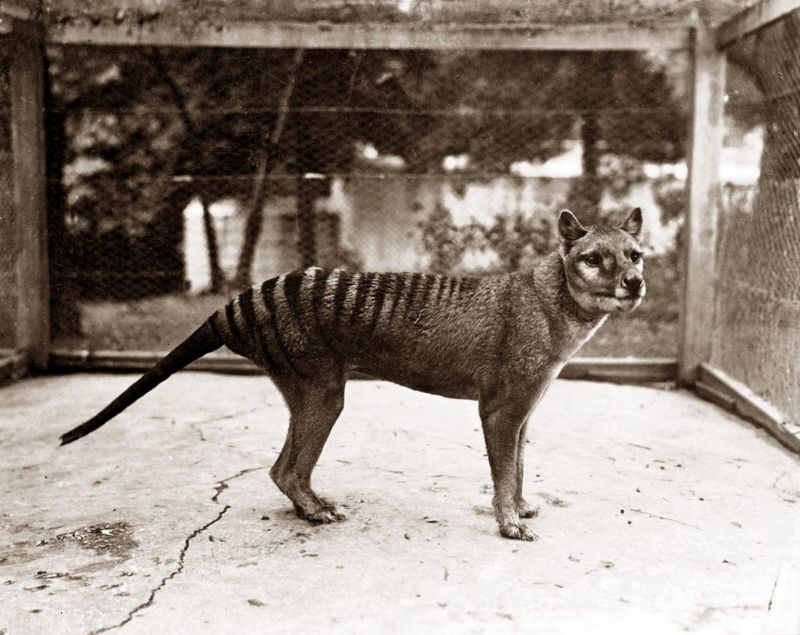
The better our ‘blueprint’ for the thylacine, the more accurately we can restore it. This project works on improving our current thylacine genome assembly. All genome assemblies have gaps, and in this project, we aim to fill those. We will also seek additional thylacine specimens with intact DNA to sequence. This will help us assess diversity in the thylacine population before its extinction.
Marsupial stem cell engineering
We will define efficient methods for marsupial stem cell derivation and maintenance in tissue culture. This is needed for the genome editing aspect of this project. We will perform proof-of-principal experiments to show we can edit marsupial DNA and produce viable outcomes. Ie. Cane toad toxin resistance.
Assisted reproductive technology
We will define methods for marsupial embryo culture, embryo transfers into the female reproductive tract and the production of a live marsupial from these techniques. We will also explore surrogate hosts for rearing of the young and the ability to hand-raise from early developmental stages.