SoilTox Lab
SoilTox Lab research focuses on contaminants in soil (and groundwater), and subsequent impacts on plants, invertebrates, and human health. Our interdisciplinary team have expertise in soil chemistry, terrestrial ecotoxicology, environmental and human health risk assessment.
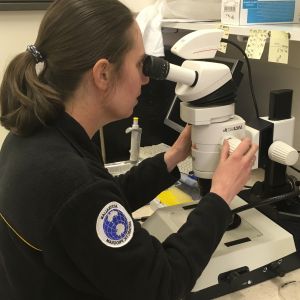
Research at the SoilTox Lab covers:
- traditional pollutants (e.g. metals and hydrocarbons); and
- emerging chemical pollutants such as per- and poly-fluoroalkyl substances (PFAS) and microplastics.
Our interdisciplinary team has expertise in soil chemistry and terrestrial ecotoxicology as well as environmental and human health risk assessment. Our research looks at the impacts of contaminants in soil including on plants, invertebrates and human health. We deliver evidence-based outcomes that are used by government, industry and the community to determine risks, make decisions and more safely manage polluted environments.
Examples of our practice-based research:
- SoilTox Lab researchers published first ever on-farm study in Australia of repeated biosolids applications to soil (2025).
- Study of the relationship between site history and human health risks, drawing on lessons from 13 years of contaminated land risk assessments in Victoria, Australia (2024).
- Literature review on industrial waste applications to soils and associated hazards and benefits (2023). The review investigated wastes relating to soil characteristics, dynamics between soils and waste constituents, and possible impacts on plants, animals, and humans.
- Research modelling ambient background concentrations of elements in soils has been incorporated into the Environment Protection Authority of Victoria’s "Proposed methodology for deriving background level concentration when assessing potentially contaminated land, Publication #1936 (2021), and is widely used by the contaminated land industry.
The SoilTox Lab is is led by Associate Professor Suzie Reichman, and is part of the School of BioSciences at the University of Melbourne, Australia.
Latest news
Contact the SoilTox Lab
The SoilTox Lab acknowledges the Traditional Owners as the original custodians of country throughout Australia and their connections to land, sea and community. We acknowledge the historic dislocation and dispossession of their lands and celebrate the extraordinary resilience of the oldest living culture on the planet. We pay respect to their Elders past and present and extend that respect to all Aboriginal and Torres Strait Islander peoples today.
The SoilTox Lab collaborates with government and industry on pollution research and projects, providing solutions for a healthier, safer and more sustainable future.
We take an interdisciplinary research approach to understanding the impacts of pollution and management challenges. We understand government, industry and the community need real-world, evidence-based information and solutions they can rely on.
Research projects
-
Using earthworms to assess palladium risk.
New study into palladium toxicity and bioaccumulation in soil and earthworms for risk assessment in terrestrial environments.
-
Assessing microplastic toxicity in soil using springtails
SoilTox Lab leading new research to improve how we measure and understand the impacts of microplastics on soil ecosystems.
-
Impacts of PFAS on soil and groundwater invertebrates
Per- and polyfluoroalkyl substances (PFAS) are known to be present in some Victorian soils and groundwater but we do not have enough information on how their presence impacts on biota.
-
Comparing the impacts of a biodegradable glitter to conventional plastic glitters on soil invertebrates
Glitter is a type of microplastic that is produced for its light reflective, sparkling properties and has many uses including for art and craft, in clothing and in makeup.
-
Repeat application of biosolids – heavy metal contamination and ecological risk assessment.
The focus of this project is to investigate the heavy metal contamination of a biosolids repeat application scenario in pasture soils to assess the potential ecological risk resulting from repeat applications.
-
Toronto and Melbourne Research Training Group PhD project
SoilTox Lab is participating in the Toronto and Melbourne Research Training Group set up between the University of Melbourne (Australia) and the University of Toronto (Canada). The group comprises researchers and jointly awarded PhD candidates from both universities.
-
Using indigenous terrestrial micro-invertebrates to assess environmental impacts of soil pollution in Antarctica
Past waste disposal practices and current human activities in Antarctica have resulted in a number of contaminated and biologically degraded sites. To assess, mitigate and remediate these sites an understanding of how native organisms respond to contamination is required.
Meet the academics and research students involved in the SoilTox Lab.
Lab lead and academic staff
A/Prof Suzie Reichman
Graduate researchers
Lab alumni
Publications from the SoilTox Lab team cover research on contaminated land, from soil chemistry, and ecotoxicology to environmental risk assessment.
Whether you are a fellow researcher, student, professional working in contaminated land or are simply curious about the latest developments in pollution research, we invite you to browse through our publications and learn more about how pollution is impacting our soil ecosystems and affecting our health.
2025
Reichman, S.M., Gu, Z., Dassanayake, K.B. Kaudal, B.B., Szokovski, L., Leonard, J.S. Coutts, A. and Surapaneni, A. 2025. Effects of multiple annual biosolids applications on the soil concentrations of metals, organochlorine pesticides and polychlorinated biphenyls in a field trial in Victoria, Australia. Waste Management, 201,114777,.
2024
Roshan, A., Polya, D., Kumar, A., Ghosh, A., Glenny, A., Sedighi, M., Reichman, S., Arora, M., & Richards, L. 2024. Comparison of the distribution of groundwater remediation units and contaminant (arsenic, iron, fluoride) distribution in Bihar, India for improved water security and management. Journal of Environmental Management, 372.
Kabay, V.G, Papaleo, C.B., Reichman, S.M. 2024. The relationship between site history and human health risks: Lessons from 13 years of contaminated land risk assessments in Victoria, Australia. Soil Use and Management 40: e12973.
McCarthy, J.S., Brown, K.E., King, C.K., Nielsen, U.N., Plaisted, K., Wallace, S.M.N., and Reichman, S.M., 2024. Population growth of two limno-terrestrial Antarctic microinvertebrates in different aqueous soil media. Environmental Science and Pollution Research, Vol. 31, 33086.
Chen, P-H., Droguet, B. E., Lam, I., Green, D.S., Vignolini, S., Gu, Z. De Silva, S., and Reichman, S.M., 2024. Assessing the ecotoxicological effects of novel cellulose nanocrystalline glitter compared to conventional polyethylene terephthalate glitter: Toxicity to springtails (Folsomia candida). Chemosphere, Vol. 366, 143315.
Grant, M.L., Bond, A. L., Reichman, S.M., and Lavers, J.L., 2024. Seabird transported contaminants are dispersed in island ecosystems. Chemosphere, Vol. 361, 142483.
[Dataset] McCarthy, J., Wallace, S.M.N., Brown, K.E., King, C.K., Nielsen, U.N., Allinson, G., Spedding, T. and Reichman, S. 2024. Data from a toxicity test using an Antarctic rotifer (Philodina sp.) exposed to copper in water, Ver. 1, Australian Antarctic Data Centre.
[Dataset] Reichman, S., Plaisted, K., King, C.K., Spedding, T. and Nielsen, U.N. 2024. Data from two toxicity tests using an Antarctic rotifer and tardigrade exposed to salinity in soil elutriate, Ver. 1, Australian Antarctic Data Centre - doi:10.26179/9yfb-ah54,
[Dataset] Reichman, S., McCarthy, J., Wallace, S., Plaisted, K., Nielsen, U.N., Brown, K.E. and King, C. 2024. Population growth of two limno-terrestrial Antarctic microinvertebrates in different aqueous soil media, Ver. 1, Australian Antarctic Data Centre - doi:10.26179/10w9-e172,
2023
Wong, H.M., Hofmann, R.W., Reichman, S.M. 2023 The interactions of iron nutrition, salinity and ultraviolet-B radiation on the physiological responses of wheat (Triticum aestivum L.). Environmental and Experimental Botany, Volume 207, 105201.
De Silva, S., Carson, P., Indrapala, D.V., Warwick, B., Reichman, S.M. 2023 Land application of industrial wastes: impacts on soil quality, biota, and human health. Environmental Science and Pollution Research (open-access) , 30, 67974–67996.
Kabay, V.G., Papaleo, C.B and Reichman, S.M. 2023 The relationship between site history and human health risks – Lessons from 13 years of contaminated land risk assessments in Victoria, Australia. Soil Use and Management, 40, e12973.
2022
Morrissy, J.G., Reichman, S.M., Currell, M.J., Surapaneni, A., Megharaj, M., Crosbie, N.D., Hirth, D., Aquilina, S., Rajendram, W., Ball, A.S. 2022. Differentiation between Impacted and Unimpacted Microbial Communities of a Nitrogen Contaminated Aquifer. Environments, 9, 128.
McCarthy, J.S., Wallace, S.M.N., Brown, K.E., King, C.K., Nielsen, U.N., Allinson, G., Reichman, S.M. 2022. Preliminary investigation of effects of copper on a terrestrial population of the Antarctic rotifer Philodina sp.. Chemosphere, Vol. 300, 134413.
Qian, B., De Silva, S., Reichman, S.M., Bao, L., Trinchi, A., Lan, M. Wei, G., Váradi, L., and Cole, I. 2022. Development of SiO2-coumarin fluorescent nanohybrid and its application for Cu(II) sensing in aqueous extracts of roadside soil. Journal of Nanoparticle Research 24: 114.
Morrissy, J.G., Currell, M.J., Reichman, S.M., Surapaneni, A., Megharaj, M., Crosbie, N.D., Hirth, D., Aquilina, S., Rajendram, W., and Ball, A.S. 2022. The variation in groundwater microbial communities in an unconfined aquifer. Water, 14(4), 613.
Nematollahi, N.J., Abbasi, S., Mohammadi, Z., Najmeddin, A., Moravej, S., Yousefi, M.R., Swennen, R., Duce, R., Reichman, S.M., and Hopke, P.K., 2022. Evaluation of the 13 May 2018 frontal dust storm in Shiraz: stable isotopes signature, source apportionment, and concentration of potentially toxic elements. Aeolian Research 58: 10080.
Wang, J., Ding, Z., AL-Huqail, A.A., Hui, Y., He, Y., Reichman, S.M., Ghoneim, A.M., Eissa, M.A., and Abou-Zaid, E.A.A. 2022. Potassium source and biofertilizer influence K release and fruit yield of mango (L.): A three-year field study in sandy soils. Sustainability 14, 9766.
[Book Chapter] de Silva, S., Huynh, T., Ball, A.S., Indrapala, D.V. and Reichman, S.M. 2022. Measuring soil metal bioavailability in roadside soils of different ages. IN: Soil Contamination by Heavy Metals and Metalloids (ed. D. Gasparatos) pp 23-36. MDPI, Basel.
2021
Death, C., Bell, C., Champnessa, D., Milne, C., Reichman, S. and Hagen, T., 2021. Per- and polyfluoroalkyl substances (PFAS) in livestock and game species: A review. Science of the Total Environment. 774: 144795.
Moodie, D., Coggan, T., Berry, K., Kolobaric, A., Fernandes, M., Lee, E., Reichman, S., Nugegoda, D. and Clarke B.O. 2021. Legacy and emerging per- and polyfluoroalkyl substances (PFASs) in Australian biosolids. Chemosphere. 270:129143.
De Silva, S. Ball, A.S., Indrapala, D.V., Reichman, S.M., 2021. Review of the interactions between vehicular emitted potentially toxic elements, roadside soils, and associated biota. Chemosphere, 263: 128135.
De Silva, S., Ball, A.S., Shahsavari, E. Indrapala, D.V. and Reichman, S.M. 2021. The effects of vehicular emissions on the activity and diversity of the roadside soil microbial community. Environmental Pollution. 277: 116744.
Morrissy, G.J., Currell, M.J., Reichman, S.M., Surapaneni, A., Mallavarapu, M., Crosbie, N.D., Hirth, D., Aquilina, S., Rajendram, W. and Ball, A.S. 2021. Nitrogen contamination and bioremediation in groundwater and the environment: A review. Earth-Science Reviews 222: 103816.
Fernando, D.R., Dennis, D., Mikkonen, H.G. and Reichman, S.M. 2021. A preliminary assessment of As and F uptake by plants growing on uncontaminated soils. Water, Air, and Soil Pollution 232: 302.
Lamb, L., Choppala, G., Yeasmin, M. Abbasi, S., Wang, L., Naidu, R., Reichman, S.M. and McGrath, S. 2021. Are root elongation assays suitable for establishing metallic anion ecotoxicity thresholds? Journal of Hazardous Materials Letters. 2: 100024.
2020
de Silva, S., Huynh, T., Ball, A.S., Indrapala, D.V. and Reichman, S.M. 2020. Measuring soil metal bioavailability in roadside soils of different ages. Environments 7: 91, doi:10.3390/environments7100091. (open access)
Gu, Z., de Silva, S. and Reichman, S.M. 2020. Arsenic concentrations and dietary exposure in rice-based infant food in Australia. International Journal of Environmental Research and Public Health. 17: 415.
Netherway, P., Gascó, G., Méndez, A., Surapaneni, A., Reichman, S., Shah, K., Paz-Ferreiro, J. 2020. Using phosphorus-rich biochars to remediate lead-contaminated soil: Influence on soil enzymes and extractable P. Agronomy 10: 454.
Seraj, M.F., Rahman, T., Lawrie, A.C., and Reichman, S.M. 2020. Assessing the plant growth promoting and arsenic tolerance potential of Bradyrhizobium japonicum CB1809. Environmental Management 66: 930–939.
2019
Qian, B., Varadi, L., Trinchi, A., Reichman, S.M., Bao, L., Lan, M., Wei, G., and Cole, I. 2019. Design and synthesis of fluorescent coumarin derivatives and their study for Cu2+ sensing with an application on aqueous soil extracts. Molecules. 24: 3569-3585
Misra B.B., Reichman, S.M. and Chen, S. 2019. The guard cell ionome: understanding the role of ions in guard cell functions. Progress in Biophysics and Molecular Biology 146:50-62
Netherway, P., Reichman, S.M., Laidlaw, M., Scheckel, K., Pingitore, N., Gascóe, G., Méndez, A., Surapaneni, A. and Paz-Ferreiro, J. 2019. Phosphorus-rich biochars can transform lead in an urban contaminated soil. Journal of Environmental Quality, 48:1091-1099
De Silva, S., Bernett, B., Meaklim, J., Abeywardane, E., and Reichman, S.M. 2019. Probing the effects of different lead compounds on the bioavailability of lead to plants. Chemosphere 230: 24-28,
Kandic, S., Tepe, S.J., Blanch, E.W., De Silva, S., Mikkonen, H.G. and Reichman, S.M. 2019. Quantifying factors related to urban metal contamination in vegetable garden soils of the west and north of Melbourne, Australia. Environmental Pollution, 251: 193-202
Mikkonen, H.G., van de Graaff, R., Collins, R.N., Dasika, R., Wallis, C.J., Howard, D.L., and Reichman, S.M. 2019. Immobilisation of geogenic arsenic and vanadium in iron-rich sediments and iron stone deposits. Science of the Total Environment, 654: 1072-1081
2018
Fernando, D.R., Lynch, J.P., Reichman, S.M., Clark, G.J., Miller, R.E., and Doody, T.M. 2018. Inundation of a floodplain lake woodlands system: nutritional profiling and benefit to mature Eucalyptus largiflorens (Black Box) trees. Wetlands Ecology and Management. 26: 961-975.
Mikkonen, H.G., van de Graaff, R., Mikkonen, A.T., Clarke, B.O., Dasika, R., Wallis, C.J., and Reichman, S.M. 2018. Environmental and anthropogenic influences on ambient background concentrations of fluoride in soil. Environmental Pollution. 242: 1838-1849.
Paz-Ferreiro, J., Gascó, G., Méndez, A., Reichman, S.M. 2018. Soil pollution and remediation. International Journal of Environmental Research and Public Health. 15:1657.
Mikkonen, H.G., van de Graaff, R., Clarke, B.O., Dasika, R., Wallis, C.J., and Reichman, S.M. 2018. Geochemical indices and regression tree models for estimation of ambient background concentrations of copper, chromium, nickel and zinc in soil. Chemosphere 210: 193-203
Laidlaw, M.A.S., Alankarage, D.H., Reichman, S.M., Taylor, M.P. and Ball, A.S. 2018. Assessment of soil metal concentrations in residential and community vegetable gardens in Melbourne, Australia. Chemosphere 199: 303-311
Mikkonen, H.G., Dasika, R., Drake, J.A., Wallis, C.J., Clarke, B.O., and Reichman, S.M. 2018. Evaluation of environmental and anthropogenic influences on ambient background metal and metalloid concentrations in soil. Science of the Total Environment 624: 599-610
Mikkonen, H.G., Clarke, B.O., Dasika, R., Wallis, C.J., and Reichman, S.M. 2018. Evaluation of methods for managing censored results when calculating the geometric mean. Chemosphere 191: 412-416
[Dataset] Mikkonen, H.G., Bentley, P.D., Barker, A.O., Dasika, R., Wallis, C.J., Clarke, B.O., and Reichman, S.M., 2018. Victorian Background Soil Database, Version 1.0. RMIT University, Melbourne, Australia.
2017
Laidlaw, M.A.S., Filippelli, G.M., Brown, S., Paz-Ferreiro, J., Reichman, S.M., Netherway, P., Truskewycz, A., Ball, A.S., and Mielke, H.W. 2017. Case studies and evidence-based approaches to addressing urban soil lead contamination. Applied Geochemistry. 83:14-30
Kappen, P., Ferrando-Miguel, G., Reichman, S.M., Innes L., Welter, E., Pigram, P.J. 2017. Antimony leaching and chemical species analyses in an industrial solid waste: Surface and bulk speciation using ToF-SIMS and XANES. Journal of Hazardous Materials 329: 131-140
Mikkonen, H.G., Clarke, B.O., Dasika, R., Wallis C.J., Reichman, S.M. 2017. Assessment of ambient background concentrations of elements in soil using combined survey and open-source data. Science of the Total Environment 580: 1410-1420.
[Industry Report] Mikkonen, H., Dasika, R., Wallis, C., Clark, B., and Reichman, S. 2017. Determining background metal and element concentrations for reducing Category C soil sent to landfill. Final report. A report prepared for the HazWaste Fund by RMIT University, 1 May 2017. Centre for Environmental Sustainability and Remediation, RMIT University, Melbourne, 211 pp.
[Industry Report] Mikkonen, H., Dasika, R., Wallis, C., Clark, B., and Reichman, S. 2017. Determining background metal and element concentrations for reducing Category C soil sent to landfill. Module 3 Completion of data analysis and mapping. A report prepared for the HazWaste Fund by RMIT University, 31 January 2017. Centre for Environmental Sustainability and Remediation, RMIT University, Melbourne, 58 pp.
2016
Eissa, M.A., Ahmed, E.M. and Reichman, S.M. 2016. Production of the forage halophyte Atriplex amnicola in metal-contaminated soils. Soil Use and Management 32(3): 350–356
Reeves, J.M., Gell, P.A., Reichman, S.M., Trewarn, A.J. and Zawadzki, A. 2016. Industrial past, urban future: using palaeo-studies to determine the industrial legacy of the Barwon Estuary, Victoria, Australia. Freshwater and Marine Research 67: 837-849
de Silva, S., Ball, A., Huynh T. and Reichman, S.M. 2016. Metal accumulation in roadside soil in Melbourne, Australia: Effect of road age, traffic density and vehicular speed. Environmental Pollution 208: 102-109
[Book Chapter] Rahman, M.A., Reichman, S.M., de Filippis, L., Sany, S.B.T., and Hasegawa, H. 2016. Phytoremediation of toxic metals in soils and wetlands: concepts and applications. IN: Environmental Remediation Technologies for Metal- Contaminated Soils (ed. H. Hasegawa, I.M.D. Mofizur Rahman and M.A. Rahman). Chapter 8. Springer, Japan
[Industry Report] Mikkonen, H., Dasika, R., Wallis, C., Clark, B., and Reichman, S. 2016. Determining background metal and element concentrations for reducing Category C soil sent to landfill. Module 2 Completion of soil survey and chemical analysis. A report prepared for the HazWaste Fund by RMIT University, 30 April 2016. Centre for Environmental Sustainability and Remediation, RMIT University, Melbourne, 58 pp.
2015
Wightwick, A, Allinson, G., Reichman, S. and Menzies, N. 2015. Copper: Environmental risks posed by copper fungicide use: An industry-wide risk assessment. Wine and Viticulture Journal 30:54-56
[Industry Report] Rahman, M.A., Currell, M. and Reichman, S. 2015. An assessment of heavy metals in canned peaches imported from China to Australia and comparison with local products: Health risk implications. A report prepared for SPC Ardmona. RMIT University, Melbourne, 26 pp.
[Industry Report] Mikkonen, H., Dasika, R., Wallis, C., Clark, B., and Reichman, S. 2015. Determining background metal and element concentrations for reducing Category C soil sent to landfill. Module 1 Summary Report: Development of a background metal database. A report prepared for the HazWaste Fund by RMIT University. Centre for Environmental Sustainability and Remediation, RMIT University, Melbourne, 30 pp.
2014
Reichman, S.M. 2014. Probing the plant growth-promoting and heavy metal tolerance characteristics of Bradyrhizobium japonicum CB1809. European Journal of Soil Biology 63:7-13
Rahman, M.A., Rahman, M., Reichman, S., Lim, R. and Naidu, R. 2014. Arsenic speciation in Australian grown and imported rice on sale in Australia: implication for human health risk. Journal of Agricultural and Food Chemistry, 62:6016–6024.
Rahman, M.A., Rahman, M.M., Reichman, S.M., Lim, R.P., and Naidu, R. 2014. Heavy metals in Australian grown and imported rice and vegetables on sale in Australia: health hazard. Ecotoxicology and Environmental Safety, 100: 53-60.
Doronila, A.I., Maddox L.E., Reichman S.M., Kolev S.D. and Woodrow I.E. 2014. Vegetation response of Australian native grass species redgrass (Bothriochloa macra (Steudel) S.T.Blake) and spider grass (Enteropogon acicularis (Lindl.) Lazarides) in saline and arsenic contaminated gold mine tailings: A glasshouse study. Minerals Engineering, 56:61-69.
[Industry Report] Reichman, S.M., Shahsavari, E., Clarke, B. Adly, H. Ball, A. and Weatherley A. 2014. An integrated assessment model for land application of waste. Subprogram 1: Assessment. A report prepared for EPA Victoria. 21 February 2014. Centre for Environmental Sustainability and Remediation, RMIT University, Melbourne, 75 pp
2013
Reichman, S.M. and Wightwick, A.M. 2013. Impacts of standard and ‘low environmental impact’ greywater irrigation on soil and plant nutrients and ecology. Applied Soil Ecology. 72: 195-202.
Wightwick, A.M., Reichman S.M., Allinson G. and Menzies N.W 2013. Influence of increasing soil copper concentration on the susceptibility of phosphomonoesterase and urease to heat disturbance. Water Air and Soil Pollution, 224:1775
Wightwick, A.M., Reichman S.M., Allinson G. and Menzies N.W 2013. The effects of copper hydroxide, captan and trifloxystrobin fungicides on soil phosphomonoesterase and urease activity. Water Air and Soil Pollution, 224: 1703
Wightwick, A.M., Reichman, S.M., Allinson, G. and Menzies N.W. 2013. Industry wide risk assessment: case study of Cu in Australian vineyard soils. Water Air and Soil Pollution, 224:1702,
Wightwick, A.M., Croatto, G., Reichman S.M., Menzies N.W., Pettigrove V. and Allinson G. 2013. Horticultural use of copper-based fungicides has not increased copper concentrations in sediments in the mid- and upper Yarra Valley. Water Air and Soil Pollution, 224:1701
Wightwick, A.M., Salzman S.S., Reichman S.M., Allinson G. and Menzies N.W. 2013. Effects of copper fungicide residues on the microbial function of vineyard soils. Environmental Science and Pollution Research, 20: 1574-1585.
2012
Black A, McLaren R.G., Reichman S.M., Speir T.W. and Condron L.M. 2012. Metal bioavailability dynamics during a two year field trial using ryegrass (Lolium perenne) grown in soils treated with biosolids and metal salts. Soil Research 50(4): 304-311
Black A, McLaren R.G., Reichman S.M., Speir T.W. and Condron L.M. 2012. Examining the integrity of soil metal bioavailability assays in the presence of organic amendments to metal spiked soils. Soil Use and Management 28(1):89-100.
Wightwick A.M., Bui A.D, Zhang P., Rose G., Allinson M., Myers J.H., Reichman S.M., Menzies NW, Pettigrove V, Allinson G. 2012. Environmental fate of fungicides in surface waters of a horticultural production catchment in south-eastern Australia. Archives of Environmental Contamination and Toxicology 62(3):380-390.
[Industry Report] Carson P., and Reichman S.M. 2012. The potential for sustainable application of industrial wastes in agricultural landscapes. A Report Prepared for EPA Victoria. 31 December 2012, RMIT University, Melbourne, 39 pp.
[Industry Report] Duckworth C., Marshall G., Currell M.J. and Reichman S.M. 2012. Background concentrations of contaminants in Victorian soils and groundwater. A Report Prepared for EPA Victoria. 20 December 2012. RMIT University, Melbourne, 78 pp.
2011
Kopittke P M, Kinraide T.B., Wang P., Blamey F.P.C., Reichman S.M. and Menzies N.W. 2011. Alleviation of Cu and Pb rhizotoxicities in cowpea (Vigna unguiculata) as related to ion activities at root-cell plasma membrane surface. Environmental Science and Technology 45:4966-73.
Black A, McLaren R.G., Reichman S.M., Speir T.W. and Condron L.M. 2011. Evaluation of soil metal bioavailability estimates using two plant species (L. perenne and T. aestivum) grown in a range of agricultural soils treated with biosolids and metal salts. Environmental Pollution 159:1523-1535
Kopittke P.M., Blamey F.P., Kinraide T.B., Wang P., Reichman S.M. and Menzies N.W. 2011. Separating multiple, short-term deleterious effects of saline solutions to the growth of cowpea seedlings. New Phytologist 189:1110-1121
2010 and prior
Wightwick, A.M., Salzman S.S., Reichman S.M., Allinson G. and Menzies N.W. 2010. Inter-regional variability in the environmental availability of fungicide derived copper in vineyard soils: an Australian case study. Journal of Agricultural and Food Chemistry 58: 449-457.
Vesk, P.M. and Reichman S.M. 2009. Hyperaccumulators and herbivores – a Bayesian meta-analysis of feeding choice trials. Journal of Chemical Ecology 35:289-96.
Piccinin, R.C.R., Ebbs S.D., Reichman S.M., Kolev S.D., Woodrow I.E. and Baker A.J.M.. 2007. A screen of some native Australian flora and exotic agricultural species for their potential application in cyanide induced phytoextraction of gold. Minerals Engineering. 20: 1327-1330.
Reichman, S.M. 2007. The potential use of the legume-rhizobium symbiosis for the remediation of arsenic contaminated sites. Soil Biology and Biochemistry 39: 2587-2593.
Reichman, S.M., Bellairs S.M. and Mulligan D.M. 2007. Effect of seed treatment on the emergence of Cassia brewsteri and Lysiphyllum carronii seeds stored in soil. Rangeland Journal 29: 133-137.
Reichman, S.M., and Parker D.R. 2007. Probing the effects of light and temperature on diurnal rhythms of phytosiderophore release in wheat. New Phytologist 174:101-108.
Reichman, S.M., and Parker D.R. 2007. Critical evaluation of three indirect assays for quantifying phytosiderophores released by the roots of Poaceae. European Journal of Soil Science 28: 844-853.
Reichman, S.M., Bellairs S.M. and Mulligan D.M. 2006. The effects of temperature and salinity on Acacia harpophylla (brigalow) (Mimosaceae) germination. Rangeland Journal 28: 175-178.
Reichman, S.M., Menzies N.W., Asher C.J., and Mulligan D.R. 2006. Responses of four Australian tree species to toxic concentrations of copper in solution culture. Journal of Plant Nutrition. 29: 1127-1142.
Reichman, S.M., Menzies N.W., Asher C.J., and Mulligan D.R. 2004. Seedling responses of four Australian tree species to toxic concentrations of manganese in solution culture. Plant and Soil. 258: 341-350.
Reichman, S.M. and D.R. Parker. 2002. Revisiting the metal-binding chemistry of nicotianamine and 2’-deoxymugineic acid. Implications for iron nutrition in strategy II plants. Plant Physiology 129: 1435-1438
Reichman, S.M., Menzies N.W., Asher C.J., and Mulligan D.R. 2001. Seedling responses of three Australian tree species to toxic concentrations of zinc in solution culture. Plant and Soil. 235:151-158.
[Book Chapter] Wightwick A., Walters R., Allinson G., Reichman S. and Menzies N. 2010 Environmental risks of fungicides used in horticultural production systems. IN: Fungicides. (ed. O. Carisse) pp 273-302. InTech, Croatia
[Book Chapter] Reichman S.M. and Parker D.R. 2005. Metal complexation by phytosiderophores in the rhizosphere. IN: Biogeochemistry of Trace Elements in the Rhizosphere (ed. P.M. Huang and G. Gobran) pp 129-56. Elsevier, Toronto.
[Book Chapter] Parker, D.R., Reichman S.M. and Crowley D.E. 2005. Metal chelation in the rhizosphere. IN: Root and Soil Management: Interactions Between Roots and the Soil (ed. R. W. Zobel and S.F.Wright ) American Society of Agronomy Monograph No. 48. pp 57-93. American Society of Agronomy, Crop Science Society of America, Soil Science Society of America, Madison, WI.
[Book] Reichman S.M. 2002. The Responses of Plants to Metal Toxicity. A Review Focusing on Copper, Manganese and Zinc. AMEEF Paper 14. 59 pp. Australian Minerals and Energy Environment Foundation, Melbourne.
[Book Chapter] Rimmer, D.L., Reichman S.M. and Menzies N.W. 2001. Bioavailability of Cu, Zn and Mn in contaminated soils and speciation in soil solution. IN: Bioavailability of Trace Elements in Soils (eds. I.K. Iskandar and M.B. Kirkham). pp 77-87. CRC Press, Boca Raton.
[Article] Reichman S. 2001. Understanding metal toxicity in plants. Groundwork. 4(2): 24-25
[Article] Reichman, S.M. 1996. Notes on the methods used for measuring the effect of red: far red ratios on seed germination. Bulletin of the Ecological Society of Australia. 26: 125-127.