Area of study / field of expertise
Ecotoxicology, soil chemistry
Previous education
Bachelor of Science (Chemistry), National Cheng-Kung University
Master of Environment, University of Melbourne
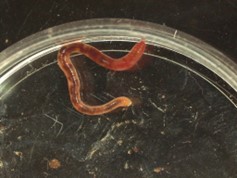
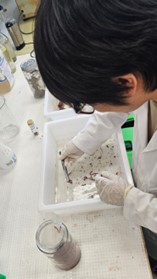
Paul is currently undertaking a PhD focused on the biogeochemistry of palladium (Pd) contamination in soil. The project involves the toxicity and bioaccumulation of Pd to earthworm (Eisenia fetida). The aim is to understand the mechanism of Pd toxicity on earthworms that can be used for risk assessment in terrestrial environments. The study research team included Po-Hao Chen, Suzie Reichman, Ian Lam and Zhuyun Gu (University of Melbourne); Silvia Vignolini and Benjamin E. Droguet (University of Cambridge); Dannielle Green (Anglia Ruskin University); and Shamali De Silva (Environment Protection Authority Victoria).
Paul's previous work involved assessing the impact of polyethylene terephthalate (PET) glitter and novel cellulose nanocrystal (CNC) glitter on springtail (Folsomia candida), an international model species in terrestrial environment. The result showed that CNC glitter is a potential alternative to traditional PET glitter due to lower toxicity. Results were published in Chemosphere and presented in 2023 ASIATOX in Taiwan and 2024 Bioscience research showcase in University of Melbourne, Australia.
Publications
Chen, P.-H., Droguet, B. E., Lam, I., Green, D. S., Vignolini, S., Gu, Z., De Silva, S., & Reichman, S. M. (2024). Assessing the ecotoxicological effects of novel cellulose nanocrystalline glitter compared to conventional polyethylene terephthalate glitter: Toxicity to springtails (Folsomia candida). Chemosphere, 366, 143315.
Links | Resources
News article: Plant-based glitter outshines plastic alternatives. University of Melbourne Pursuit, Oct 2024.
Glitter microplastics are commonly found in sewage sludge and wastewater, but a new sustainable glitter made from plant cellulose has been developed and has no impact on the environment.
News article: Glitter has lost its shine – but scientists may have found a safer substitute. The Guardian, Oct 2024.
Shimmery cellulose-based alternative looks safer for soil than conventional microplastics, Australian-led research finds.
Contact